
I watched Vine International save a man’s life one time.
It wasn’t like our day-to-day work, which is to supply physicians in Guatemala who are caring for patients with few options. That work seems slow, quiet, determined. This happened fast.
He was bleeding, the man, lying on his back by the road. The pain was beginning to register, and whatever patience he might have had in the ninety seconds after the accident was gone by the time Bruce Allsop began to palpate him in a foreign language. Palpate was a new English word for me, it means what I saw Bruce doing, which was feeling all over this shouting man’s body, trying to find out what bones and organs might have been broken, separated, or dislodged. I haven’t learned how to say palpate in Spanish.
Bruce went on Vine’s very first trip to Guatemala in 1993, as one of the four guys who used their vacation time to drive a van full of medical supplies all the way from Cedar Bluff Road in Knoxville, TN to an orphanage and a medical clinic in Guatemala’s highlands. Bruce was at that time beginning his career as a family practice doctor. He’s filled three and a half passports with Guatemala stamps since then, and even after leaving his 9 to 5 behind, he’s still flying, driving, and sometimes stethoscoping all over the country. He’s always asking how Vine can better serve the doctors who are serving there.
On this morning, I had taken two bites out of a McGriddle (judge us all you want; they’re delicious and the drive-through is quick) when Ignacio jerked the wheel over. “Doc,” Ignacio said, “go help that guy.” He had our truck shut off and was three jogging steps away by the time I realized my job was to be Bruce’s interpreter.
Bruce went to the man and palpated without much success. The guy’s face and hand were bloody, but didn’t seem to be bleeding. After some high-volume conversation and some choice words that I probably translated into English - it seems like a duty to include everything a man in that situation says - I think it became clear to the man that his injury was in his leg. Bruce went to inspect. When the man tried to move his legs, his left ankle and foot stayed where they were. Blood was pumping out from where his shin had come apart. His jeans and his boot had covered it up before, but no longer.
Bruce got up onto his knees and said “We’re going to need a stick.” He had his belt off before he finished saying it.
The stick gave him leverage on the tourniquet he made with his belt. At that point it was probably a question of losing the leg or the life, so Bruce kept his eye on the open arteries and his hand on the tourniquet stick. EMTs arrived in their little minivan, strapped the victim to a board, and set off for a surgery. It was 6:30 on a Wednesday morning but city traffic meant the closest ER fifteen was minutes away at least.
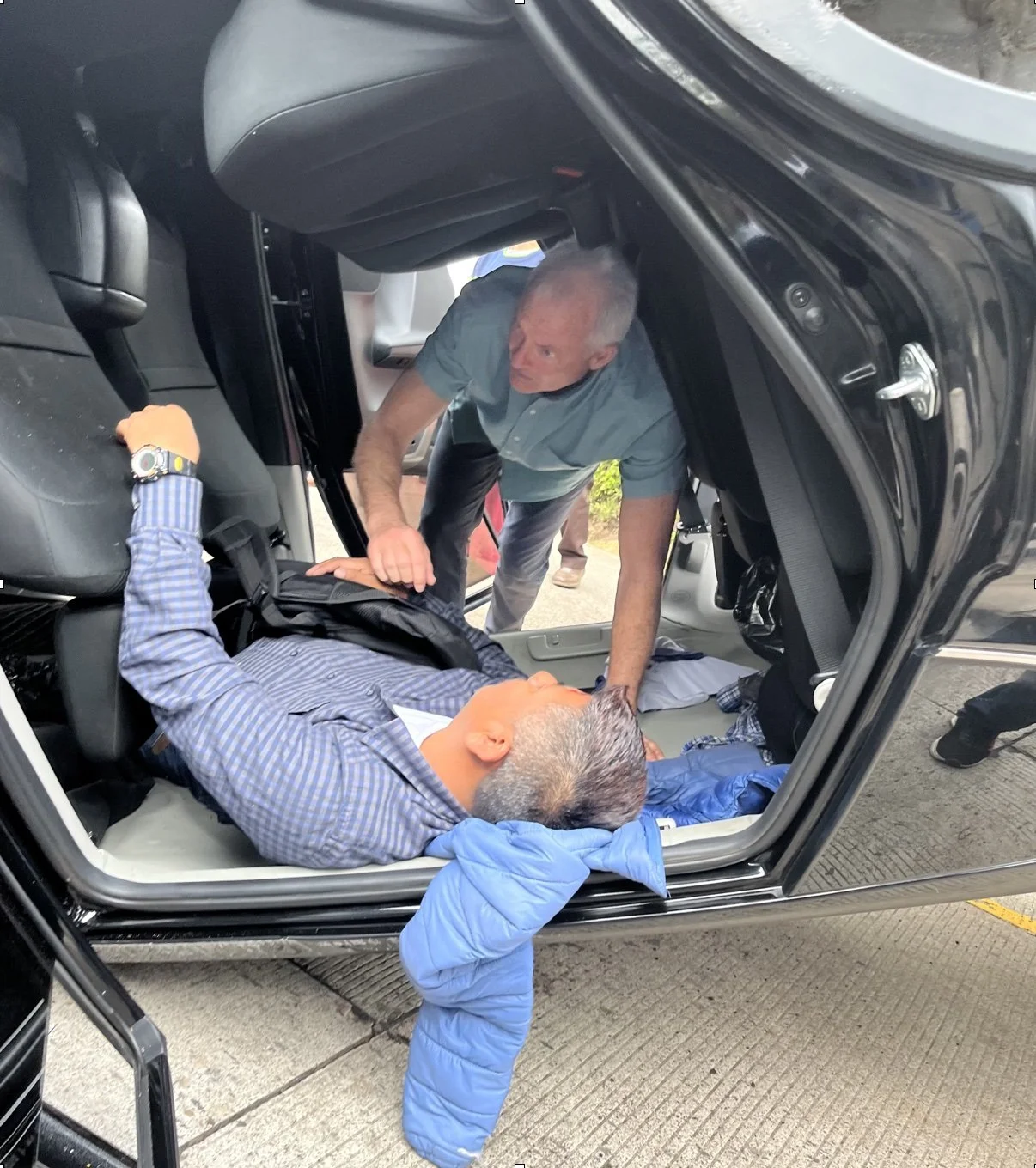
I took a picture of Bruce treating the man with the leg, but it’s not for posting here. This is Bruce attending a different man, in a different accident we happened on, on a different day. No blood.
Ignacio had been directing traffic, moving the crash vehicles, and making sure the driver who caused the accident didn’t flee the scene. He knows how to take command of a situation, and he also knows enough to avoid any entanglement with the police: once Bruce’s patient was carried off, we jogged back to our truck and we left. We were doing 35 on an open road before I remembered I had a half of a cold McGriddle in the seatback pocket.
Bruce spent the rest of the week beltless. He is not one to take credit for saving lives - right place/right time, the EMTs and surgeons are really the ones to thank, all that.
And it’s true that roadside emergencies are not his focus or Vine’s, even if they do come up.
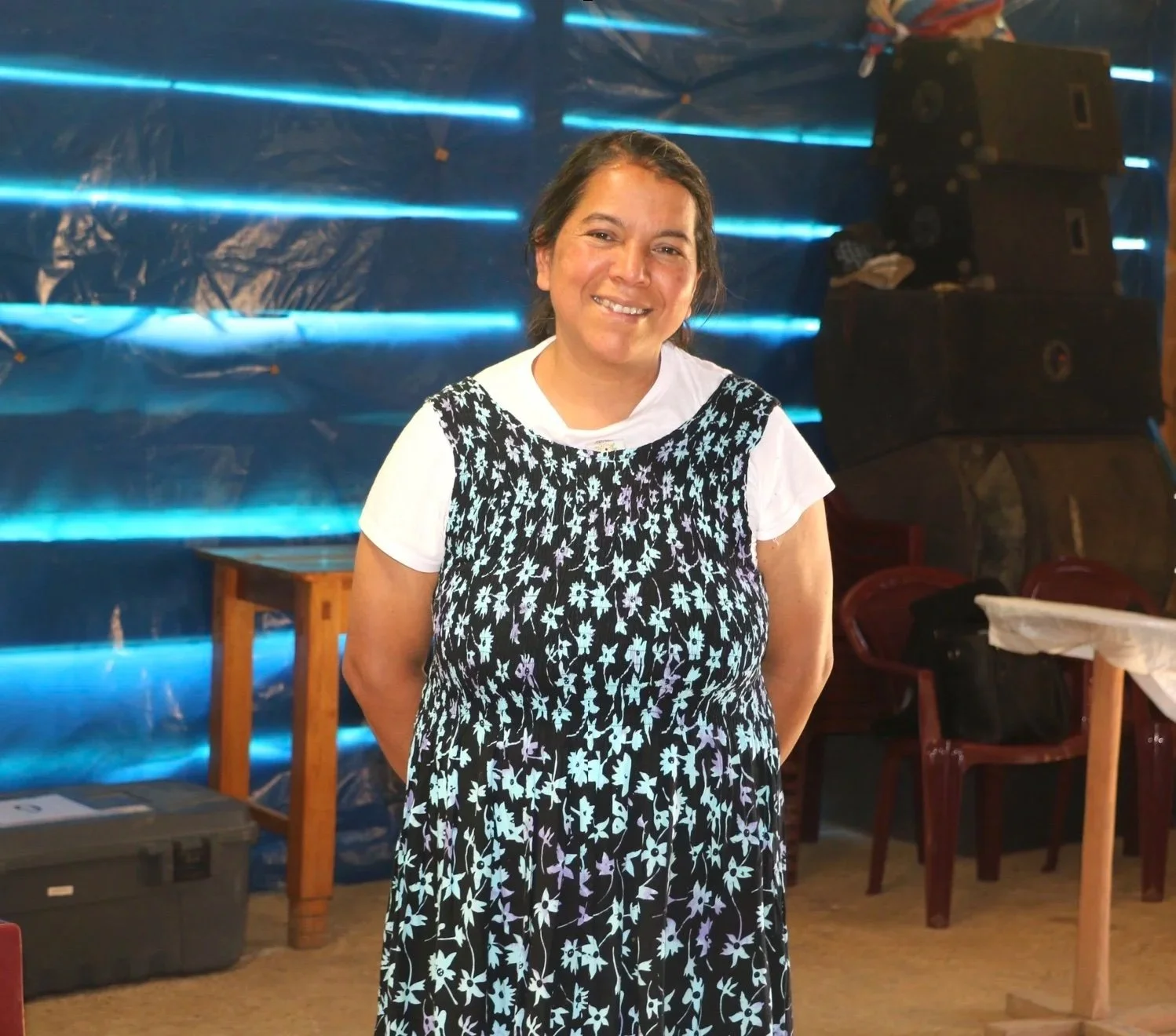
María Jovita
It wasn’t Vine who saved Maria Jovita’s life - not the first time she thought it needed saving.
“It all started with a little knot on my head. I never thought it would keep growing. I might have had it when I got married but I didn’t pay attention to it because it was so small that I’m not even sure it was there.
She had a boyfriend, and they got married. “I asked him to marry me! And I might not have done that if I had known.”
They had a girl. “When she was about a year old, the knot had grown to where I couldn’t ignore it. We had a little birthday celebration for her and not long after that I fell down for the first time. Just fell down walking. I hoped it was just a fluke. But maybe six months after that, I fell down again and blacked out. And imagine: if you don’t have any money, you can’t think about trying to get treatment from a doctor! Because to leave home, to find a doctor, to ask him to treat you - that all takes money. And where’s that going to come from?
“So it wasn’t until things were just terrible and they didn’t think I was going to go on living that I finally was taken to a doctor. Thank God, they saw me and operated on me. My husband got the radio station to announce that I needed blood donors, and four people donated blood. So it’s thanks to God and to the blood donors and the surgeons that I lived. They told my husband I might not recover, but thank God I did.”
I don’t know the surgeons who operated on María Jovita for free.
Our network of physicians consists mostly of general practitioners. Many of them were trained as specialists, but each of them at some point dedicated themselves to the needs of the communities they live in. Their clinics are open to everybody, and Vine’s warehouse is open to them.
Not long after her surgery, María Jovita became sick again, but in a different way. She didn’t have a way to get back to the surgeons, and they probably weren’t the right people to diagnose her anyway.
“That’s when I went to Dr. Argueta’s clinic. They come near where I live. They show up, they listen, and they have treated me for the last few years.”
Drs. Paul and Lindsey Argueta run Agape In Action, and the traveling clinic they operate sees patients all over Guatemala’s central highlands. Every weekday, the team drives to a village, they unload the makings of a clinic from the back of a pickup truck, and they see however many patients need help that day. The second Tuesday of each month, they come close to Maria Jovita’s village.
She learned she had diabetes, and the Arguetas helped her understand how to manage it.
“They have helped me control my diabetes, and I’m much healthier than I was before. If it weren’t for the medicine they gave me at first, I don’t see how I would have made it. I am still taking some, and they’re still taking care of me.”
“I’m so glad the doctors have helped me, with appointments and with medicine. I asked God to help me with it and I think he has. God used Dr. Paul’s care and the medicine he gave me to make me better, and I’m grateful.
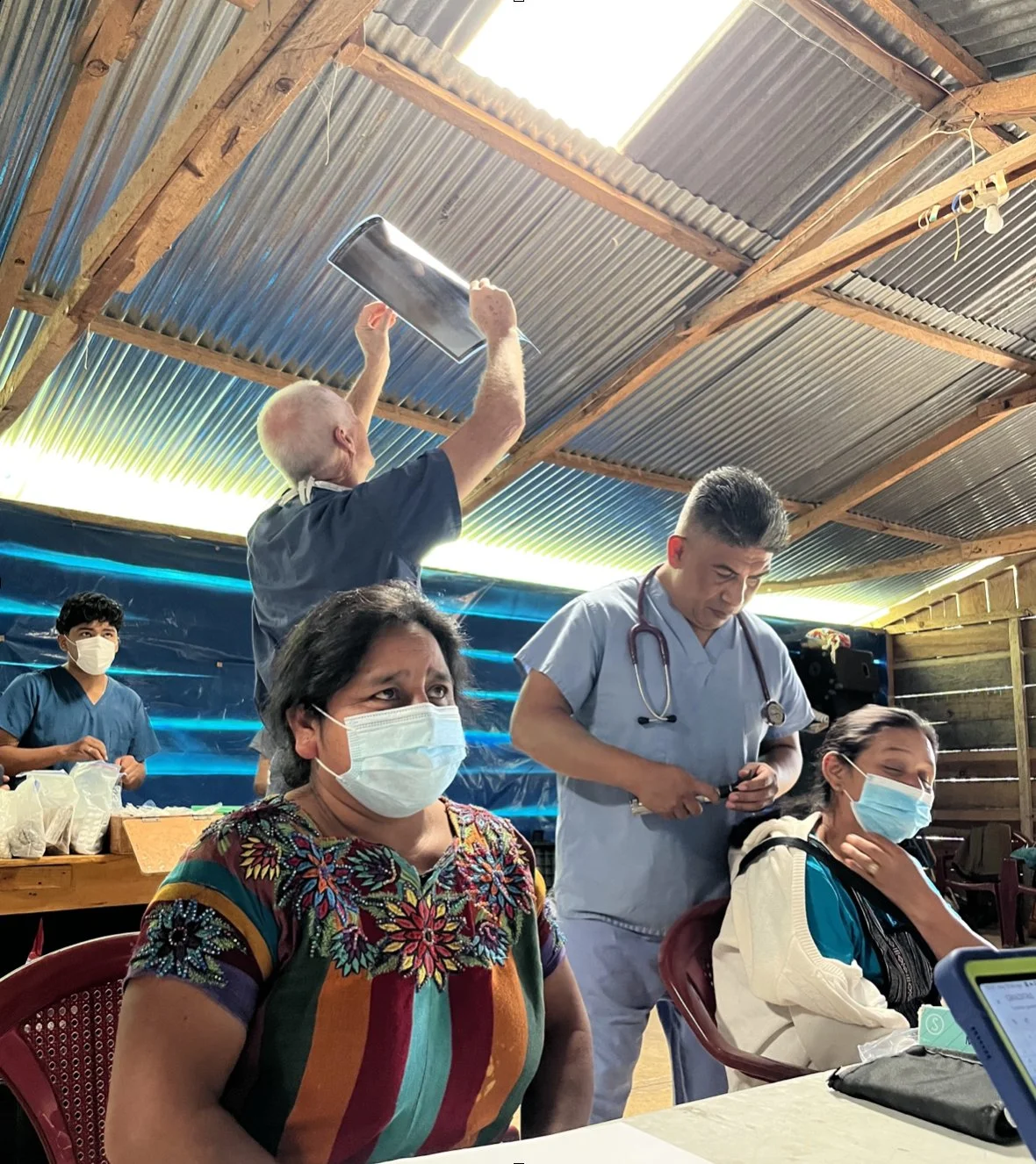
A remote clinic - Dr Bruce reads an x-ray by skylight, and Dr Paul examines a patient
Paul and Lindsey are both physicians; Paul is also a pastor.
He graduated from seminary before he went to med school. Their team of nurses and aides want to help heal people. But they are just as serious about the spiritual lives of the people they treat. That’s why Andrés is on staff, and it’s why he’s always present at clinics. He’s available for anyone who wants prayer, counseling, or conversation. Paul has told me he thinks Andres’ work is the most exciting thing they get to do.
Andrés took us to Maria Jovita’s house, and it was clear when we arrived that he’s spent time with the whole family. Andrés is a person who shows up.
Showing up is what all our partners in Guatemala do. You and I help them do it through Vine International.
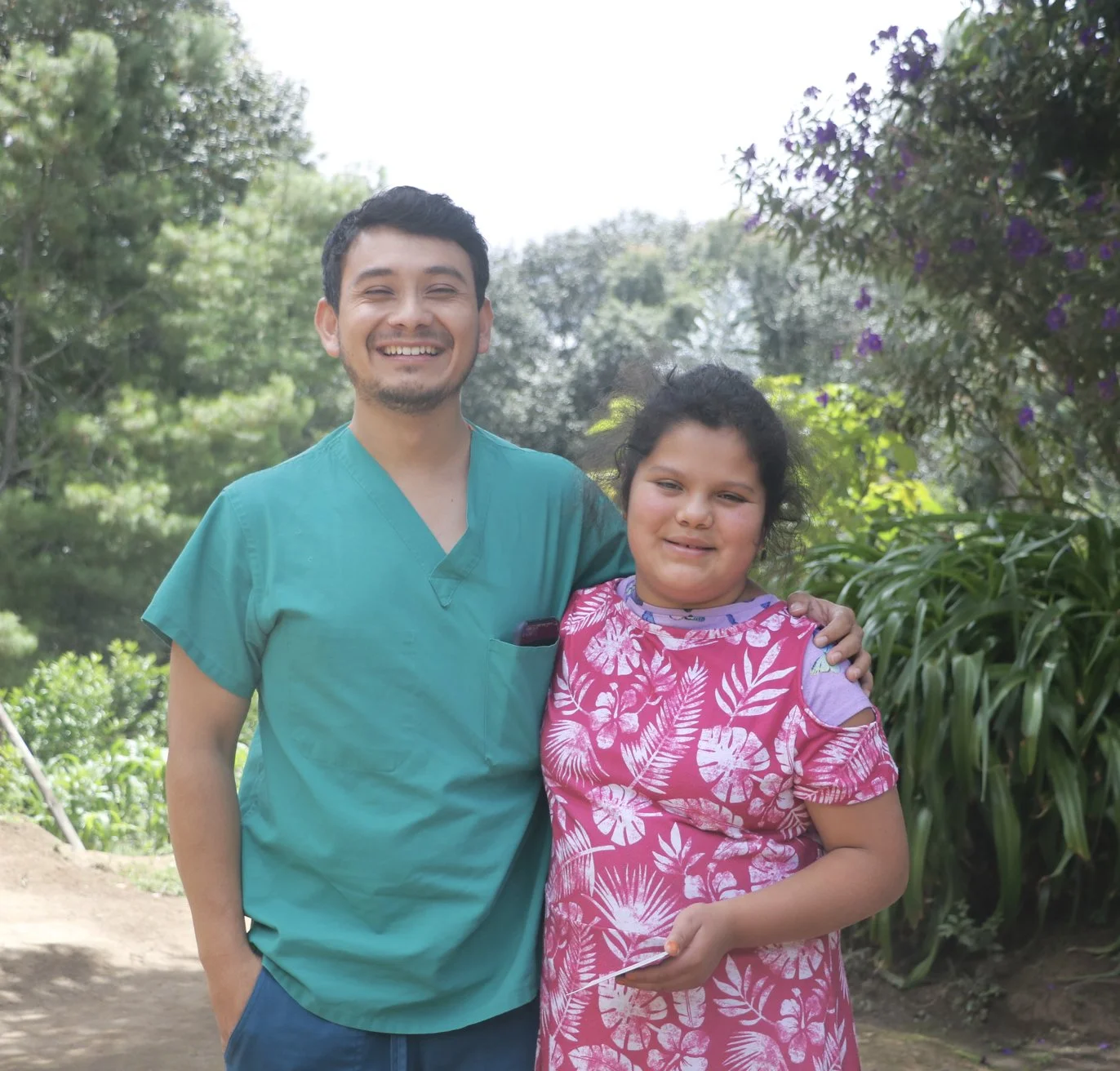
Andrés with María Jovita’s daughter
“When Andrés comes by, he always mentions where he is studying.
He’ll say ‘I’m reading through Matthew right now, in chapter four, where are you?” and we talk about how God works in our lives. I need that too. I need that encouragement. I’m trusting in God to keep going. I’m memorizing some scriptures, like Joshua 1:9 and Psalm 23 and Philippians 3.”
Our partner physicians do save lives, and they help in emergencies. You’re part of that because you’re part of Vine International. But dramatic emergencies are not our specialty. What we’re really trying to do is to show up. Like Andrés, like Paul, like Lindsey. They show up every day with a clinic in the bed of their pickup truck. Andrés shows up with good news for anyone who wants it. Through Vine, you supply them with medicine, wheelchairs, food, and equipment. They all consider you a vital member of the team - they’ve certainly heard about you! - and wouldn’t be able to do what they do without you. Thank you for making it possible for them to show up, to serve, to take care of people, and to save lives, over ten minutes or ten years.
-Brady Greene, Executive Director